|
Border Towns
Alnwick |
|
|
|
|
|
|
|
|
|
|
|
|
|
|
Around and about Alnwick |
|
|
|
|
|
Battle of Flodden Battle of Homildon Hill Battle of Otterburn
|
|
1120

|
Morpeth is an ancient market town
situated in the loop of the river Wansbeck. It is located 14
miles north of the city of Newcastle and approximately 12
miles west from the sea at Cambois.
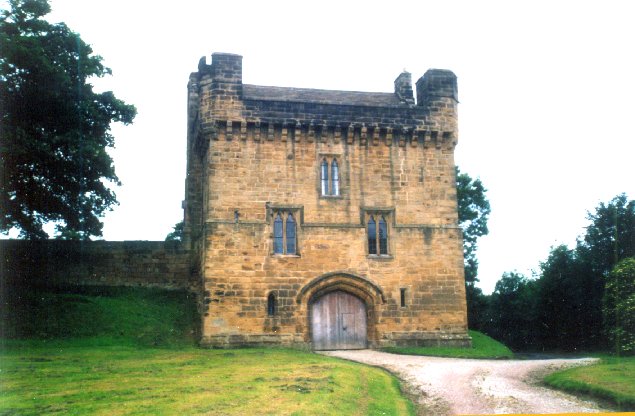
Thought to have been a small village before the Norman invasion, Morpeth became a place of great importance when the lordship was granted by William the Conqueror to one of his followers, William de Merlay, who is reputed to have later founded Morpeth Castle. The castle was built of timber in 1095 and later destroyed. In the 12th century the castle was transferred to its present site. All that remains today is the gatehouse, which has been restored by the Landmark Trust and now used as a holiday home. The descendants of William de Merlay continued to govern Morpeth until it passed through marriage to the Greystoke family in the 13th century. The barony was transferred to the Dacres in the 15th century by the marriage of Elizabeth, daughter of Ralph 7th Baron Greystoke, to Thomas 2nd Baron Dacre. In 1577 Elizabeth Dacre married Lord William Howard, consequently passing the possession of the Castle, barony, manor and lordships of Morpeth, to that family. It was their great-grandson, Charles Howard, who was created the Earl of Carlisle in 1661. The Earls of Carlisle continued as lords of the manor of Morpeth, and owners of the castle, until their family estates were broken up in the early part of the 20th century.
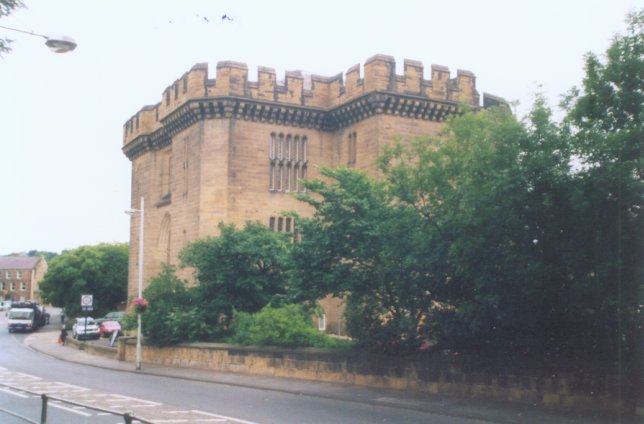
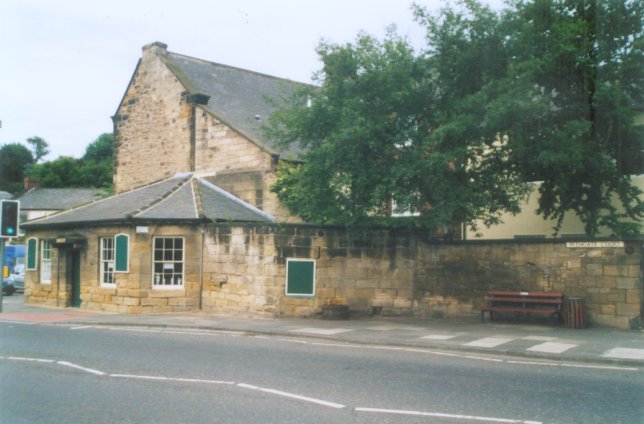
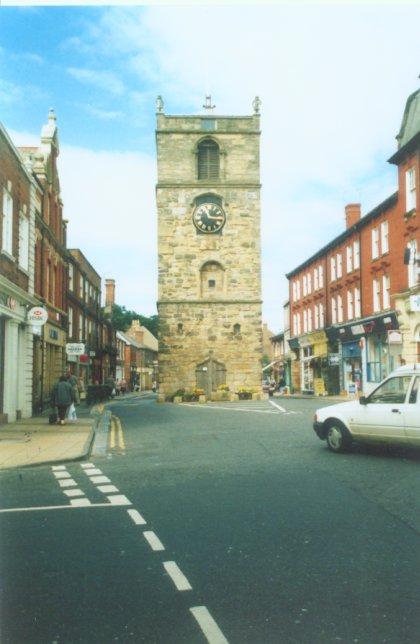
There are several landmarks in Morpeth town centre, the most notable being the Town Hall, which was erected in 1869-70 from the plans of architect R Johnson. It replaces a former building built in 1714 and designed by Sir john Vanbrugh, the façade being an exact reproduction of the original. The clock tower, which stands nearby at the entrance to Oldgate, is a rare example of a freestanding bell tower. Originally built as a jail, the tower contains a clock which is reputed to be a very old one bought from Bothal Castle. For many years it had only one pointer. The curfew bell still sounds at 8 o'clock each evening. Another prominent landmark in Morpeth is the Court House, which was designed by John Dobson and in built in 1820-28. The Court House, which was used to hold petty sessions and house chief constables' offices, is now used as an apartment block and fitness centre.
Today Morpeth, with a population of 16,000, is one of Northumberland's major market towns and the administrative centre for the County Council. The County Council, along with the pharmaceutical manufacturers Pharmacia, is the major employer in the town. Morpeth boasts many riverside walks which link to Carlisle Park, a leisure centre, and a good range of shops, restaurants and hotels. A weekly market is held on Wednesday and a farmers' market on the first Saturday of each month. |
|
|
|
|
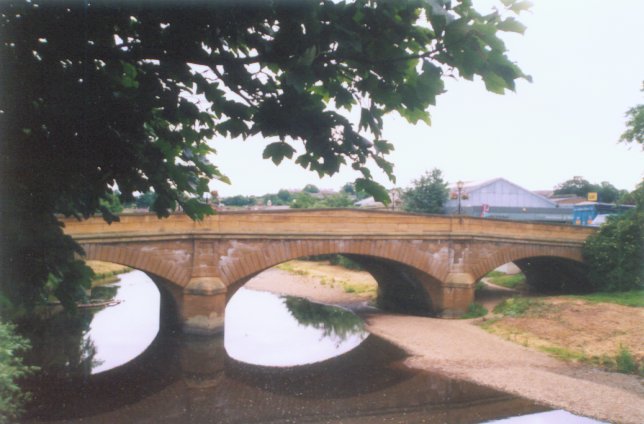
The borough was founded on a crossing point on the Wansbeck and developed when a bridge was built in 1296. The bridge was demolished when Thomas Telford built a replacement bridge in 1829, but remnants of the old bridge can still be seen. Although some distance from the Border it suffered in the Border conflicts and there is much of interest to the historian in and around the town. It is worthy of note that, unlike so many Northumbrian towns, most of Morpeth's buildings are brick built. This may be accounted for by the presence of good building clay in the area. Bricks were made at nearby Pegswood. Many of the old buildings in the centre are virtually intact having escaped the attentions of modern developers. Market day: Wednesday
The Clock Tower
Isolated clock towers
are quite rare.
|
|
|
Morpeth Castle
In Carlisle Park and
Castle Wood. Built on a strong site. The gatehouse of Morpeth Csatle as it is today
In Carlisle Park and
Castle Wood. Built on a strong site. Morpeth Castle was built shortly after the Conquest by William de Merlay. He had been rewarded with the Barony of Morpeth by being involved in crushing the revolt in Northumberland against the Norman occupation. The castle played little part in Border warfare and the defenses had been neglected. Yet during the Civil War a garrison of 500 Scots were able to withstand a siege 20 days against an army of 2700 men under the command of the Marquis of Montrose. A number of time and bowls which were fired at the time have been recovered. The castle was never repaired, only the gatehouse appears to have been worth saving it is interesting to note that the ruined castle formed of the subject of one Turner's pictures. The famous artist took the to view from the old bridge. Location
|
|
|
Morpeth Chantry A bridge chantry founded in 1296 and
tolls were collected for crossing the nearby bridge. It was one of the
Grammar Schools created by Edward VI, son of Henry VIII. It is now the a tourist information
centre, a craft centre and bagpipe museum. Visitors to Northumberland will notice the distinctive ‘r’, in speech which can only be accurately reproduced by those who have been born and bred in the county. The sound is produced in the throat rather than the tongue.
|
|
|
Hartburn Church St Andrews is 11th
century. |
|
|
|
|
|
Bothal Castle Two and a half miles downstream
from Morpeth. Two and a half miles downstream from Morpeth. The castle was besieged in 1405 when it was involved in a family quarrel. The castle is associated with the Ogle and Bertram families.
Map reference : 81 074 804 On the road from Belsay to
Otterburn, Included in the hall is a 15th century bastle. Situated on the top of a hill, it was part of a village defended by a surrounding wall. Note Gallowgate Hill nearby and Shortflatt Tower half a mile to the north east. The bastle is associated with the Swinburne family.
|
|
|
The Herons and the Lisles The Herons and the Lisles were two of the principal families in Northumberland and they were bitter enemies. In one encounter, a Heron, fleeing for his life, sought sanctuary in the nearest church. He had almost reached safety, but his pursuer, a Lisle caught up with him in the church porch and killed him.
The people of the
nearby village Brockensfield,
|
|
|
There are interesting interior displays and exhibitions and attractive gardens. The great landscape gardener, Capability Brown went to school in the adjoining village of Cambo and may have had some influence on the layout of the gardens. The Griffin's Heads are believed to have reached the North as ballast in a collier. It was the practice for ships to carry coal to the Thames and return laden with ballast. The Hall was later held by the Blackett family. It is now National Trust property.
|
|
|
Mitford Castle From Morpeth about two miles west near Mitford village you will find the 12th century castle. The site is a strong one and much of the west wall and the shell keep still survives. A footpath leads from the bridge at Mitford to the castle. In the 13th century a stone keep was built within the castle bounds. It is the only five sided keep in England. Not much of it is left - o only the vaulted basement. It came into the
possession of Robert Mitford in the He was appointed chancellor of Ireland, a post, which now by tradition, is given to every retiring Speaker. The castle suffered during a siege in 1321 and was involved in the Civil War. It was then allowed to decay. Mitford Castle has been associated with "the Mitford Gang" a group of bandits who made life very uncomfortable for the locals. The gang leader, Gilbert de Middleton kidnapped Lewis de Beaumont, Bishop of Durham and later, John de F Felton, constable of Alnwick. He demanded possession of Alnwick Castle in return for the freedom of the two men. But during December of 1317 Felton's supporters led by Lord Graystock, made a surprise raid on the castle and freed the hostages. The two Middleton brothers involved, Gilbert and John were captured and after trial were executed in London the very next month.
|
|
|
Newminster Abbey
One mile west of
Morpeth.
It was a Cistercian
abbey founded 12th century. |
|
|
Around and about |
|
|
Cresswell Tower |
|
|
|
|
|
|
1131
|
Morpeth is an ancient market town
situated in the loop of the river Wansbeck. It is located 14
miles north of the city of Newcastle and approximately 12
miles west from the sea at Cambois.
Thought to have been a small village before the Norman invasion, Morpeth became a place of great importance when the lordship was granted by William the Conqueror to one of his followers, William de Merlay, who is reputed to have later founded Morpeth Castle. The castle was built of timber in 1095 and later destroyed. In the 12th century the castle was transferred to its present site. All that remains today is the gatehouse, which has been restored by the Landmark Trust and now used as a holiday home. The descendants of William de Merlay continued to govern Morpeth until it passed through marriage to the Greystoke family in the 13th century. The barony was transferred to the Dacres in the 15th century by the marriage of Elizabeth, daughter of Ralph 7th Baron Greystoke, to Thomas 2nd Baron Dacre. In 1577 Elizabeth Dacre married Lord William Howard, consequently passing the possession of the Castle, barony, manor and lordships of Morpeth, to that family. It was their great-grandson, Charles Howard, who was created the Earl of Carlisle in 1661. The Earls of Carlisle continued as lords of the manor of Morpeth, and owners of the castle, until their family estates were broken up in the early part of the 20th century.
There are several landmarks in Morpeth town centre, the most notable being the Town Hall, which was erected in 1869-70 from the plans of architect R Johnson. It replaces a former building built in 1714 and designed by Sir john Vanbrugh, the façade being an exact reproduction of the original. The clock tower, which stands nearby at the entrance to Oldgate, is a rare example of a freestanding bell tower. Originally built as a jail, the tower contains a clock which is reputed to be a very old one bought from Bothal Castle. For many years it had only one pointer. The curfew bell still sounds at 8 o'clock each evening. Another prominent landmark in Morpeth is the Court House, which was designed by John Dobson and in built in 1820-28. The Court House, which was used to hold petty sessions and house chief constables' offices, is now used as an apartment block and fitness centre.
Today Morpeth, with a population of 16,000, is one of Northumberland's major market towns and the administrative centre for the County Council. The County Council, along with the pharmaceutical manufacturers Pharmacia, is the major employer in the town. Morpeth boasts many riverside walks which link to Carlisle Park, a leisure centre, and a good range of shops, restaurants and hotels. A weekly market is held on Wednesday and a farmers' market on the first Saturday of each month. |